


In the dynamic world of beverage marketing, the design of packaging boxes plays a pivotal role not only in attracting consumers but also in ensuring practicality, especially when it comes to storage. As a seasoned beverage packaging box supplier, I understand the challenges and requirements that businesses face in this regard. This blog post aims to provide insights into designing beverage packaging boxes that are easy to store, balancing aesthetics, functionality, and cost - effectiveness.
Understanding the Storage Environment
The first step in designing a storage - friendly beverage packaging box is to understand the environment where it will be stored. Beverages can be stored in various settings, such as warehouses, retail shelves, or home refrigerators. Each environment has its own space constraints and requirements.
Warehouses typically have large - scale storage systems, often using pallet racks. Packaging boxes need to be stackable and stable to maximize vertical space utilization. Retail shelves, on the other hand, have limited width and height. The packaging should fit neatly on the shelves without overcrowding and be visually appealing to catch the consumers' eyes. Home refrigerators have even more restricted space, so the packaging should be compact and able to fit in the available compartments.
Choosing the Right Materials
The choice of materials significantly impacts the storage characteristics of the packaging box. Cardboard is a popular choice for beverage packaging due to its affordability, lightweight, and recyclability. Corrugated cardboard, in particular, offers excellent strength - to - weight ratio, making it suitable for stacking heavy beverage bottles. It can also be easily customized in terms of size and shape.
Plastic materials, such as PET or HDPE, are another option. They are durable, moisture - resistant, and can be molded into various shapes. However, plastic packaging may be more expensive and less environmentally friendly compared to cardboard.
Wooden boxes are often used for high - end or specialty beverages. They provide a luxurious look and good protection but are heavier and bulkier, which can pose challenges in storage, especially in large quantities.
Optimizing the Box Dimensions
Proper dimensioning is crucial for easy storage. The length, width, and height of the box should be carefully calculated to fit the storage space efficiently. For example, in a warehouse, boxes should be designed to fit standard pallet sizes (e.g., 48" x 40" in the United States). This allows for easy stacking and transportation using forklifts.
When it comes to retail shelves, the box width should be in line with the shelf width, and the height should be appropriate to ensure visibility. For home storage, smaller, more compact boxes are preferred, especially for single - serving beverages.
Designing for Stackability
Stackability is a key factor in storage efficiency. To ensure that the boxes can be stacked safely, the top and bottom surfaces should be flat and even. Reinforced corners and edges can prevent the boxes from collapsing under the weight of the stack.
Interlocking designs can also be incorporated to enhance stack stability. For example, some boxes have protrusions on the bottom and corresponding indentations on the top, which fit together when stacked. This not only makes the stack more stable but also helps to prevent the boxes from shifting during transportation.
Considering the Bottle Arrangement
The way the beverage bottles are arranged inside the box can also affect storage. For multiple - bottle packs, a well - organized arrangement can reduce the overall volume of the box. For example, arranging the bottles in a hexagonal pattern can often save space compared to a simple rectangular arrangement.
Additionally, the use of dividers or inserts can keep the bottles in place, preventing them from moving and potentially breaking during storage and transportation. These dividers can be made from cardboard, foam, or plastic, depending on the requirements of the beverage.
Incorporating Handles and Carrying Features
While not directly related to storage, handles and carrying features can indirectly impact it. Boxes with convenient handles are easier to move around in the storage area, reducing the risk of damage during handling. They also make it more convenient for consumers to transport the beverages from the store to their homes.
Some packaging designs incorporate fold - out handles that do not add extra bulk when the box is stored. Others have built - in carrying straps or grips, which can be easily grasped.
Customization and Branding
Customization and branding are important aspects of beverage packaging, but they should not compromise the storage functionality. When adding branding elements such as labels, logos, or embossing, ensure that they do not protrude too much and affect the stackability or fit of the box.
For example, a raised logo on the side of the box may prevent it from fitting snugly on the shelf or cause instability when stacked. Instead, consider using flat - printed or engraved branding techniques.
Examples of Storage - Friendly Beverage Packaging
There are many examples of well - designed beverage packaging boxes that are easy to store. The Best Wine Gift Box is designed with a compact size and a sturdy structure, making it suitable for both retail display and home storage. It has a flat top and bottom, allowing for easy stacking.
The Bottle Presentation Box is another great example. It is designed to hold a single bottle securely and has a sleek, space - efficient design. The box is made from high - quality cardboard, which is lightweight yet strong enough to protect the bottle.
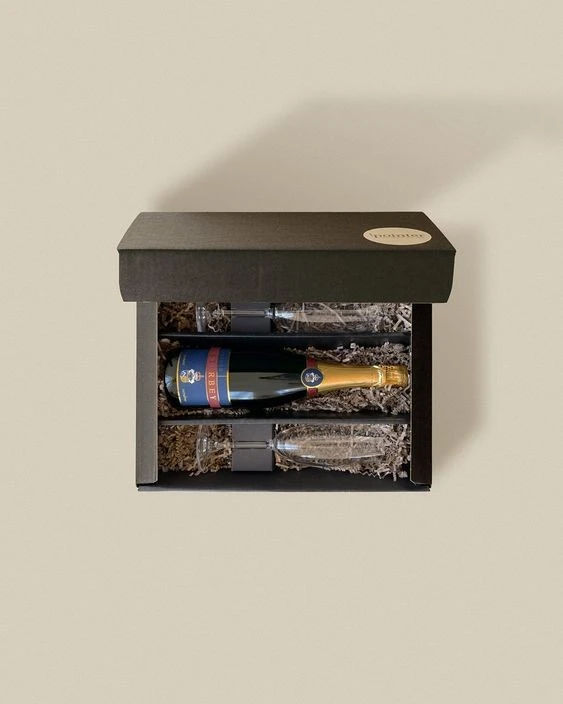
The Personalized Champagne Gift Box offers a combination of luxury and storage practicality. It can be customized with the customer's logo or message, while still maintaining a stackable and compact design.

Conclusion
Designing a beverage packaging box that is easy to store requires a comprehensive approach, considering the storage environment, materials, dimensions, stackability, bottle arrangement, and branding. By carefully balancing these factors, businesses can create packaging that not only looks good but also meets the practical needs of storage.
If you are looking for high - quality, storage - friendly beverage packaging boxes, we are here to help. Our team of experts can work with you to design and produce the perfect packaging solution for your beverages. Whether you need a simple cardboard box or a customized luxury gift box, we have the experience and resources to meet your requirements. Contact us today to start the procurement negotiation process and take your beverage packaging to the next level.
References
- Packaging Machinery Manufacturers Institute. (2020). Beverage Packaging Handbook.
- Smith, J. (2019). Sustainable Packaging Design for the Beverage Industry. Journal of Packaging Science and Technology.
- International Safe Transit Association. (2018). Guidelines for Packaging Design and Testing for Beverage Products.


